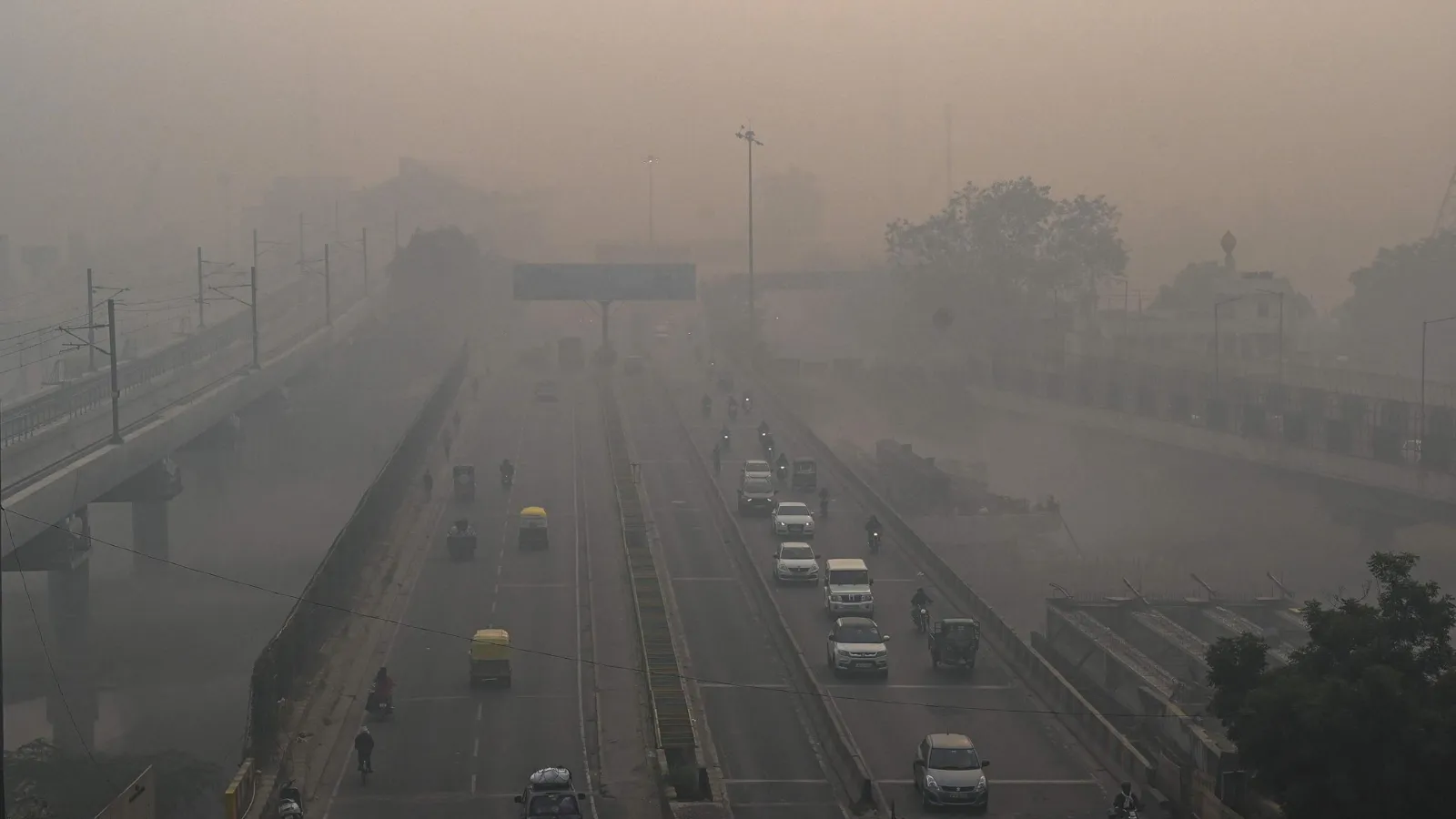
Delhi’s Diwali Pollution Spike Exposes Gaps in Air-Quality Monitoring
PM2.5 readings climbed towards 1,000 micrograms per cubic metre before data disappeared at dozens of monitoring stations, raising questions about the reliability of public air-quality information.
New Delhi’s severe post-Diwali pollution has raised fresh questions about the reliability of India’s air-quality monitoring system after particulate pollution readings climbed to exceptionally high levels and subsequently disappeared from several monitoring stations.
An analysis of Central Pollution Control Board (CPCB) records by the Hindustan Times found that PM2.5 readings at multiple Delhi monitoring locations approached 1,000 micrograms per cubic metre during the night of 8–9 November.
At the North Campus monitoring station, readings reportedly reached 999 micrograms per cubic metre at 10 pm. At the CRRI Mathura Road station, the concentration reached 981 micrograms per cubic metre, while the ITO station recorded 994 shortly before its readings stopped.
The newspaper reported that 43 of the 59 monitoring stations examined had gaps in PM2.5 data between approximately 10 pm and 6 am.
In several cases, the disappearance of particulate readings occurred while the stations continued reporting measurements for other pollutants.
The findings have raised questions about the extent to which the official pollution assessments reflected the severity of conditions experienced by residents.
Experts and environmental observers have warned that missing measurements during peak pollution periods can complicate assessments of exposure and public-health risks.
It is important, however, to distinguish the available evidence from allegations of deliberate interference.
The reported gaps do not establish that monitoring equipment was intentionally switched off or that authorities deliberately suppressed information. Possible explanations include technical limitations, measurement ceilings and problems in the systems processing or transmitting data.
The distinction between particulate concentration and the Air Quality Index is also important.
PM2.5 measures fine airborne particles small enough to penetrate deep into the respiratory system. India’s AQI, by contrast, is a composite index with a maximum displayed value of 500. Extremely high individual pollutant readings therefore cannot be interpreted as equivalent numerical AQI readings.
Delhi’s recurring winter pollution crisis is driven by several overlapping factors, including transport emissions, industrial activity, construction dust, agricultural residue burning, weather conditions and seasonal fireworks.
The consequences are felt most heavily by children, older people, outdoor workers and individuals with respiratory or cardiovascular vulnerabilities.
The absence of reliable, accessible monitoring information during a severe pollution episode can also make it more difficult for residents to assess risks and take precautions.
The latest episode reinforces the importance of transparent monitoring, reliable equipment, independent scrutiny and timely publication of air-quality information.
For India, tackling urban pollution requires not only stronger emissions controls but also confidence that the public can access accurate information about the air they breathe.
Research and reporting sources
- Hindustan Times — Delhi PM2.5 readings approached 1,000 before monitoring gaps, 9 November 2026
- The Indian Express — Monitoring stations recorded missing readings during Diwali pollution, 9 November 2026
- The Times of India — Missing readings and pollution peaks in Delhi, 10 November 2026
- India Today — Public air-quality display problems during Diwali, 9 November 2026


